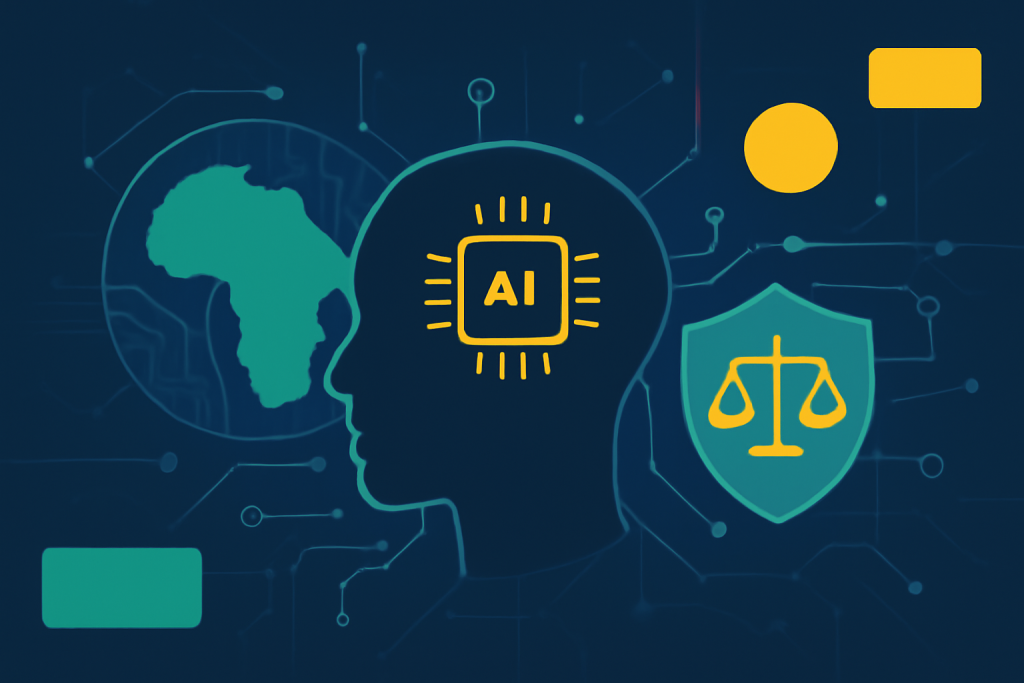
Key takeaways
- Africa's rapid digital transformation necessitates robust AI governance frameworks to ensure responsible deployment and ethical standards.
- Establishing AI governance structures is crucial for sustainable development and to address challenges such as data sovereignty and infrastructure gaps.
- International collaborations, such as the UN's 'AI for Good Global Commission,' are pivotal in shaping global AI strategies that consider Africa's unique context.
- Africa's young population presents a unique opportunity to lead in AI development and governance, provided there is investment in education and infrastructure.
- Adopting the SCALIM Framework can guide African nations in developing AI strategies that are scalable, adaptable, and aligned with local needs.
Introduction
As Africa embarks on its digital transformation journey, the integration of Artificial Intelligence (AI) into various sectors offers unprecedented opportunities for economic growth, improved public services, and enhanced quality of life. However, without robust AI governance frameworks, these advancements may lead to unintended consequences, including ethical dilemmas, data privacy concerns, and exacerbation of existing inequalities. Therefore, establishing comprehensive AI governance structures is imperative for Africa to harness AI’s full potential responsibly and sustainably.
The Need for Robust AI Governance in Africa
Africa’s rapid adoption of AI technologies necessitates governance frameworks that ensure responsible deployment and adherence to ethical standards. The continent’s diverse socio-economic landscapes and cultural contexts require AI systems that are not only effective but also equitable and inclusive. Without such frameworks, there is a risk of perpetuating biases, infringing on privacy rights, and undermining public trust in AI applications.
Challenges in AI Governance
Several challenges impede the effective governance of AI in Africa:
- Infrastructure Gaps: Limited access to reliable internet connectivity and data centers hampers the development and deployment of AI solutions. As noted in a recent study, Africa accounts for less than 1% of global data centers, and internet penetration is only 38%, highlighting significant infrastructure deficits. ([arxiv.org](https://arxiv.org/abs/2606.30656?utm_source=openai))
- Data Sovereignty Issues: The lack of control over data generated within African nations raises concerns about data privacy and security. Establishing data governance policies that prioritize local control is essential to protect citizens’ information and foster trust in AI systems.
- Capacity Building: There is a pressing need to develop local expertise in AI to ensure that African nations can design, implement, and oversee AI systems effectively. This includes investing in education and training programs to build a skilled workforce capable of managing AI technologies.
- Policy and Regulatory Frameworks: While some African countries have initiated AI policies, many lack comprehensive and cohesive strategies. The absence of clear regulations can lead to inconsistent practices and missed opportunities for collaboration and innovation.
International Collaborations and Initiatives
Recognizing the global nature of AI challenges, international collaborations are crucial in shaping AI governance strategies that consider Africa’s unique context. The United Nations, in partnership with the International Telecommunication Union (ITU), launched the “AI for Good Global Commission” to unite global tech leaders and heads of state in developing international AI strategies. This initiative aims to bridge the growing divide in global AI regulation by fostering collaboration between technology developers and policymakers. ([axios.com](https://www.axios.com/2026/07/01/un-ai-commission-ceos-world-leaders?utm_source=openai))
Additionally, the African Union’s endorsement of its first Continental AI Strategy in 2024 signifies a collective commitment to developing AI policies that align with the continent’s development goals. However, the majority of African countries still lack national AI strategies, and those that have adopted them face common challenges in operationalizing policy objectives and translating them into effective governance and implementation. ([oecd.org](https://www.oecd.org/en/publications/oecd-artificial-intelligence-case-studies_c517fcf5-en/ai-governance-in-africa_1ff55135-en.html?utm_source=openai))
Leveraging Africa’s Demographic Advantage
Africa’s young and dynamic population presents a unique opportunity to lead in AI development and governance. By investing in education and infrastructure, African nations can cultivate a generation of innovators and leaders equipped to shape the future of AI. Initiatives such as the Addis AI Forum, which convened business leaders, policymakers, technologists, and educators to discuss AI’s emergence and future in Africa, underscore the continent’s proactive approach to AI integration. ([youtube.com](https://www.youtube.com/watch?v=Hq4NYOnRYHs&utm_source=openai))
Adopting the SCALIM Framework for AI Strategy
To guide the development of AI strategies that are scalable, adaptable, and aligned with local needs, African nations can adopt the SCALIM Framework. This framework emphasizes:
- Scalability: Designing AI solutions that can grow and adapt to various contexts and challenges.
- Adaptability: Ensuring AI systems can evolve in response to changing technological landscapes and societal needs.
- Local Alignment: Tailoring AI applications to reflect African values, languages, and cultural nuances.
Implementing the SCALIM Framework can help African countries develop AI systems that are not only technologically advanced but also socially responsible and culturally relevant.
Conclusion
As Africa continues to integrate AI into its development agenda, establishing robust AI governance frameworks is essential to ensure responsible deployment, uphold ethical standards, and achieve sustainable development. By addressing infrastructure gaps, promoting data sovereignty, building local capacity, and engaging in international collaborations, African nations can create an environment where AI contributes positively to societal advancement. Embracing frameworks like SCALIM will further enable the continent to develop AI solutions that are scalable, adaptable, and aligned with its unique needs and values, positioning Africa as a leader in responsible AI governance.
Ready to turn AI insight into responsible business value?
Explore how executive AI governance, digital transformation, and responsible innovation can strengthen your organisation’s strategy.