
The Book Podcast · Interactive Book Blogs

Read. Listen. Ask.

Explore Samson Sakoane’s two forthcoming books with the Scholar and the Practitioner. Choose a book, read its ideas and bring your questions into the discussion.

Choose your book

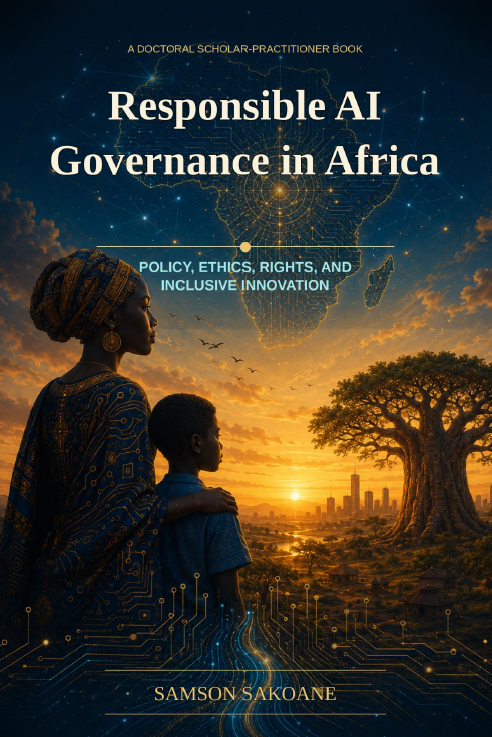
Responsible AI Governance in Africa by Samson Sakoane

Forthcoming book · Chapters 1–10

Responsible AI Governance in Africa

Policy, Ethics, Rights, and Inclusive Innovation

Read the abstract

Responsible AI Governance in Africa examines how African institutions can approach artificial intelligence through policy, ethics, rights, and inclusive innovation. It brings the opportunities of AI into conversation with the responsibilities of public and private leadership, asking how governance can protect people while enabling meaningful technological progress. The book considers accountability, human oversight, institutional trust, and context-sensitive decision-making as foundations for responsible adoption. Its central concern is how African priorities and lived realities can shape AI governance, rather than allowing governance to emerge only after deployment. Written from a doctoral scholar-practitioner perspective, it connects ethical reflection with the practical work of leaders, policymakers, and organisations seeking an inclusive AI future.

Explore the Book Podcast
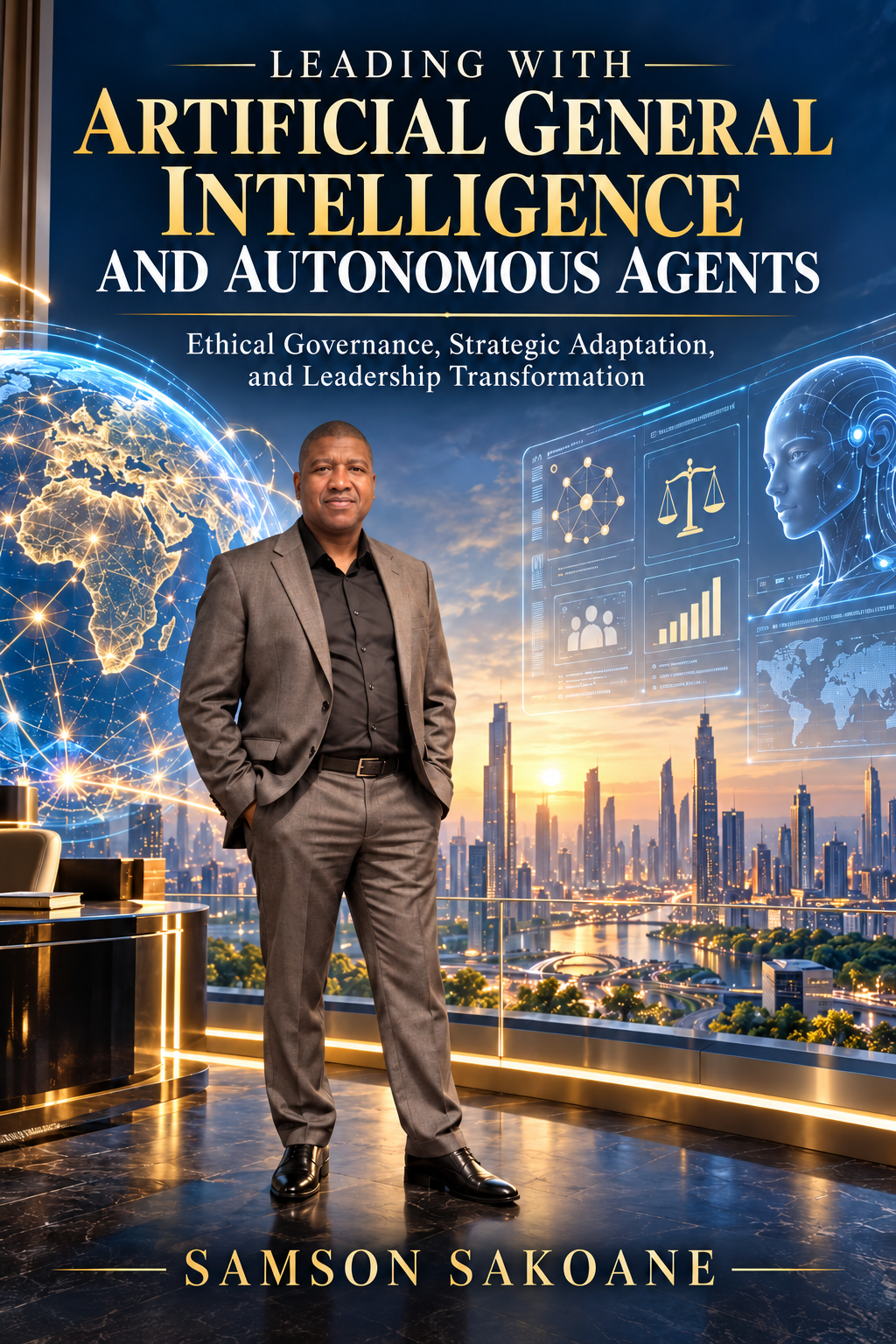
Leading with Artificial General Intelligence and Autonomous Agents by Samson Sakoane

Forthcoming book · Chapters 1–5

Leading with Artificial General Intelligence and Autonomous Agents

Ethical governance, strategic adoption and leadership transformation

Read the abstract

Leading with Artificial General Intelligence and Autonomous Agents examines the responsibilities that arise when organisations give increasingly capable AI systems and autonomous agents a role in their work, with particular attention to African settings. AGI provides a horizon for governance inquiry; current products and cases are not presented as established AGI. Drawing on secondary evidence, the book proposes SCALIM and its five connected components to clarify human–AI collaboration, ethical assessment, agent orchestration, accountability, trust and compassionate engagement. These proposals have not been validated or deployed as interventions in this study. Practical applications identify decisions, accountable owners, records and questions for independent evaluation.

Explore the Book Podcast

The hosts use AI-generated voices. Articles and prepared conversations are adaptations of the selected manuscript; practical scenarios are illustrative. One verified account serves both books. Questions use the selected book’s available chapters.

Forthcoming book · Interactive book blog

Responsible AI Governance in Africa

Responsible AI Governance in Africa examines how African institutions can approach artificial intelligence through policy, ethics, rights, and inclusive innovation. It brings the opportunities of AI into conversation with the responsibilities of public and private leadership, asking how governance can protect people while enabling meaningful technological progress. The book considers accountability, human oversight, institutional trust, and context-sensitive decision-making as foundations for responsible adoption. Its central concern is how African priorities and lived realities can shape AI governance, rather than allowing governance to emerge only after deployment. Written from a doctoral scholar-practitioner perspective, it connects ethical reflection with the practical work of leaders, policymakers, and organisations seeking an inclusive AI future.

Samson Sakoane · Member services

Join the book conversation.

Explore the book, assess your next step and return to your private reports.

Email verifiedPrivate workspaceOne shared account

Create your member account

Already registered for SCALIM? Sign in with the same email. Complete your profile once to use all member services.

Welcome back

Sign in to your workspace

Prefer a secure email link?

Your email is your sign-in credential. After verification, you receive a private link to choose your own password. No password is sent in plain text.

Built around your decisions

Start with a diagnostic, save a report and ask follow-up questions. Your reports belong to your account. These tools support reflection and human review; they do not certify compliance or replace professional judgment.